Aug 30, 2009

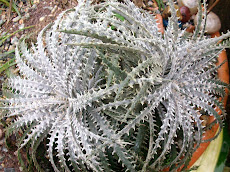
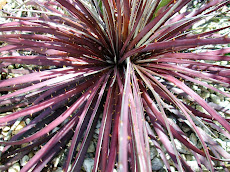
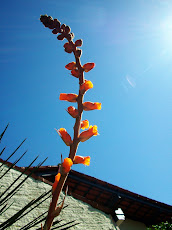
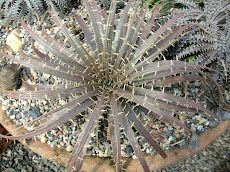
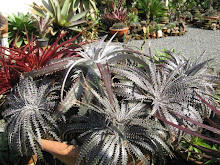
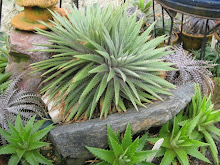
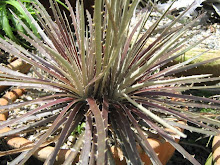
Dyckia pectinata

...and God commanded: be gorgeous!

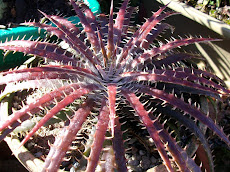
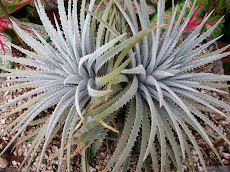
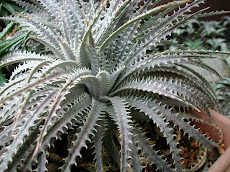
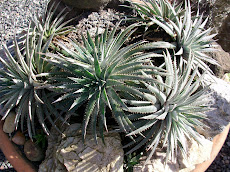
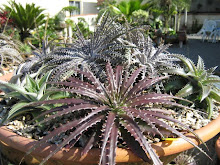
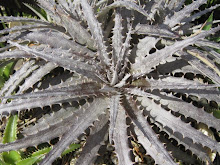
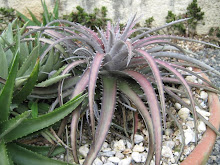
Dyckia julianae

...and God ordered: Be beautiful!

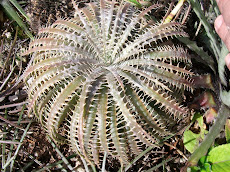
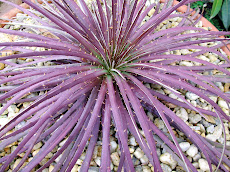
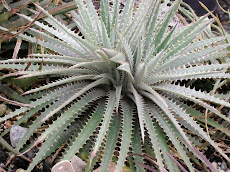
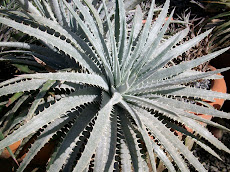
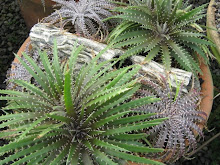
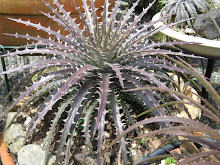
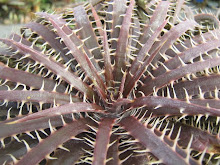
Dyckia sp from Goiás.


This is an intriguing new found Dyckia from Goiás.
This is a shooter species and clones like mad.
Found by a friend´s mother in a Cerrado region in Goiás.


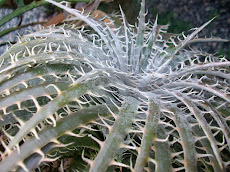
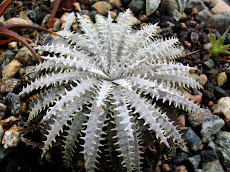
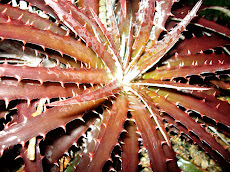
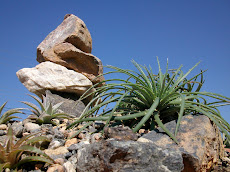
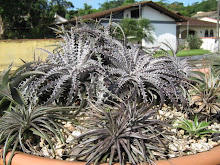
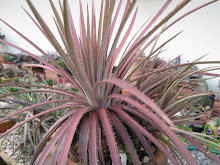
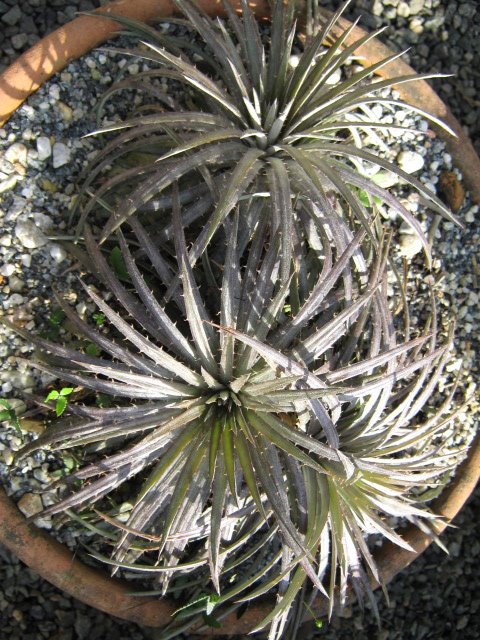
Dyckia leptostachya

Dyckia leptostachya

This Dyckia species was largely used to lend color to hybrids.
This are wilderness collected plants.
These were found in a very numerous population of a rocky outcrop amid a tobacco
plantation in Rio Grande do Sul.

Dyckia chorestaminea

This wonderful Dyckia is know as Dyckia spaghetti.
It sure reminds a dish of spaghetti but just when not well correctly kept.
Plants that do not get enough sunshine may present elongated and distorted leaves.
This badly maintained plant is the Dyckia spaghetti.
a wee maintained Dyckia chorestaminea presents stiff leaves.


Dyckia chorestaminea

This Dyckia chorestaminea variety bears the narrowest leaves of all.
It is also a more colorful variety and it it found close to Porto Alegre
alongside Lagoa dos Patos.
It is is one Northern variety.

Dyckia chorestaminea smallest species native to the northernmost are of the Lagoa dos Patos in Rio Grande do Sul.

These plants are so small they would fit in one hand of yours
and some room would still be free.
The upper plant is a rubra one.


This is one of the rarest Dyckias native to Rio Grande do Sul.
It is the smallest Dyckia chorestaminea variety and also the most beautiful.
Thrives on rocks high in a stone hill in the Nothermost area of Dyckia chorestaminea habitat.
It is in fact the North easternmost variation.
Here you can have an idea of size and observe they are blooming.
This is of of the most difficult Dyckias to keep alive in cultivation.
They must be kept in a most ventilated position and the water may not
stay on the substrate but just pass through it.
It is a so rare and difficult to be kept plant I consider these my Garden´s birthday
gift to me as today I am entering mine 55 year as I was born in August 30th, 1954.
This is a sunny 22 degrees Centigrade Sunday and my garden is under the most perfect
blue sky and I ask you a gift from yours no matter who nor where you are:
Try to be kind, peaceful, forgiving to yourself and anyone around you: people, animals, and all situations. Kindness is the most perfect gift I wish from e for you today.
Be kind to yourself and be blessed.
This I wish to you in abundance and endlessly.

Aug 29, 2009

Dyckia ferruginea or the Golden Dyckia.

" ...so the angels got together and decided to create a dream come true...
...they sprinkled a gold dust on your leaves..."
Big, beautiful singulary colored and with nothing to compare...this is
Dyckia feruginea.

Dyckia noelii- This is a proposed name.

This is one of the most beautiful new found Southern Dyckia species.
Here in its Spring colors.
This is an outstanding Dyckia wit a remarkable history.
Native to Santa Catarina.


Dyckia plumbea , this is a name proposal and refers to the color of the lead


This more than beautiful Dyckia grows in Joinville Uphills
close to Campo Alegre.
This plant is unnamed and lives on a rocky cliff very
hard to climb. The environment is a extreme xerofitic one.
The rocky wall faces North and gets full Sun.
Flowers in red conspicuous flowers.

Dyckia sp from Lençol, São Bento do Sul, Santa Catarina


This is a small Dyckia species, colorful and beautiful and totally unknown to me.
It was found in a rocky outcrop in the atop a small hill surrounded by grass field.
Here they are about to bloom.

Dyckia Spider Witch Blooming


The flowers color and shape are those of the Dyckia chorestaminea blooming
but they are attached to Dyckia dawsoni flower spike.
This is Dyckia Spider Witch

Dyckia Chão de Estrelas


Dyckia Chão de Estrelas
This already presented here hybrid of mine has a dark phase.
This was Dyckia marnier-lapostollei Bahia flowers pollinated with Dyckia brevifolia pollen.
The name honor one of the most beautiful Brazilian Songs: Chão de Estrelas.
"...e a lua perfurando nosso zinco salpicava de estrelas nosso chão..."
The silver dusting reminds the stars made by the moonlight passing through the ceiling many holes.
Note the white spines.

Aug 28, 2009

Dyckia speciosa - a proposal for name.

Striking and outstanding are not enough to say how beautiful
This new species is.
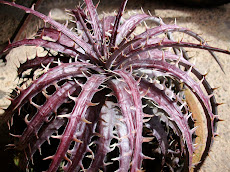
This is also a rubra form as a green one was found.
Lives on rocks on a mountain in Northeastern Santa Catarina.

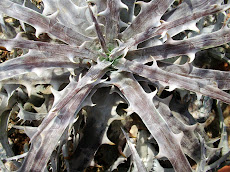
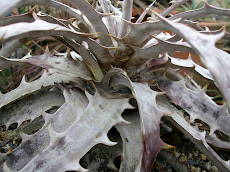
The underleave surfaces are covered with a luxurious tick silver
coating and the contrast with the intense red is overwhelming.


Dyckia speciosa
This is a proposed name

This jewel is an unnamed species.
As I do do not agree with hidings I show my findings.
Light is ever a better choice than the dark!
I think of no better name for this Santa Catarina native magnificent new Dyckia species.
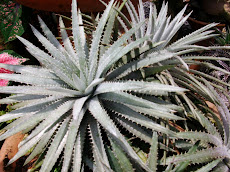
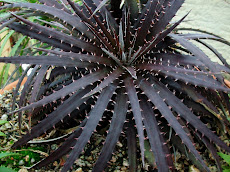
Resemble Dyckia gloriosa but this has even narrower and stiffer leaves.Being smaller and darker colored its spines are bigger and more numerous.
The flower stalk is smaller and slender and the flowers deffer in shape and color.
Also its flowers are nicely scented.
Northeastern Santa Catarina is one of the richest region in Dyckia matters in Whole Brazil.
I believe we will easily find more than (50 Fifty!) Dyckias species in this region alone.
The Southern Dyckia species are notable for being extremely difficult to be classified.
We for sure are bond to get some more shinning pearls added to that three volutes
taxonomy pearl collar that already hangs down to the Science belly button.


A new Dyckia sp from Cuiabá Mato Grosso.


At first this plant was taken as another already described Dyckia species Dyckia pumila.
But it is clearly something brand new, new and beautiful and also small.
This is a gracious small plant the certainly would feel safe on your
grandma sunny windowsill.
Native to Serra de São Vicente ( São Vicente Mountains) close to Cuiabá in Mato Grosso.
Its colors are spectacular and may change according to the quality of Sun light
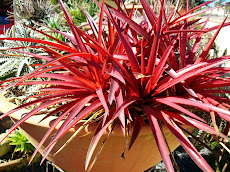
they get Here in South they turn into an intense red shade during Summer.

Today I sing and I dance in German celebrating friendship.


Heute Ich, meine Haus, meine Garten, meine Hertz sang und getantz in Deutch.
Die Schartz anthurium ist auf meine Garten.


Dyckia fosteriana bloom and Dyckia fosterana affinis bloom


Some Dyckia fosteriana variety blooms are a sight to behold.
Below blooming of a Dyckia sp fosteriana affinis from Pien -Paraná

Dwarf Dyckia species from the sussuarama habitat.

Sussuarama is our Brazilian name for the Puma or Mountain Lion Felix concolor.
This little small Dyckia species was found in the sussuarama habitat
in Northeastern Santa Catarina.
Dyckia sussuaramae would fit good on it.

New Santa Catarina Dwarves. Unnamed and unkown Dyckia species.


Beautiful and bi-colored!
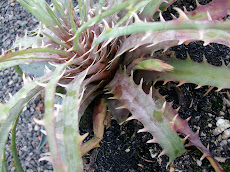
Narrow leaved and well armed this is a gracious little Dyckia species.
Santa Catarina has many more Dyckia species than once wondered our
botanists. They, the guys, could not climb the hills or were afraid of being eaten alive
by the Sussuarana our heroic big feline Felix concolor, the Puma.
These wonderful creatures are getting back to the Santa Catarina Northeast mountains
and may be spotted once in a while. The Puma loves the very same Dyckia habitat
and are frequently spotted on rock fields.
Old famine animals may be dangerous to wandering Dyckia lovers, no doubt.
In Northeast mountains I have one or two dogs with me and never, never I would dare to
climb a mountain alone.
Two years ago during a fog Spring morning Dyckia adventure we saw one Puma on a rock above us in a distance of less than 50 meters.
It took a while to spot the magnificent animal but the beast was watching us for a long time.
The big and impressive Puma was sit looking at us, me and a friend. When we saw the animal it just lift turned back and went out of sight with all its dignity. The dogs are not to chase the animal but to alert us. We were the dangerous animals in that scenery.
It is a blessing to see such a creature and people now are well alerted not to harm any animal.
It would be a very serious crime to do any harm to any living animal.

Let us get back to Dyckias!
Isn´t this here beautiful?
On the rocks at distance you would not see this as a Dyckia but as stone lichen.
The plant leaves a kind of foggy vision and you must get well close to really see it.


Dwarf True Dyckia species native to Northeastern Santa Catarina

Similar but not the same.
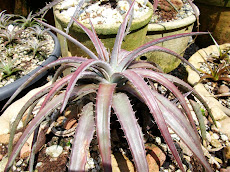
These are two Dyckia species! Both dwarf and both wild and unnamed.
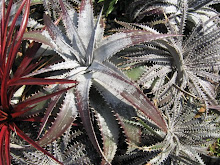
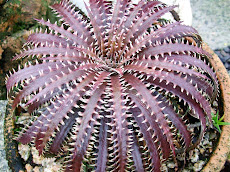
Below we have the green and the rubra form.
The color is permanent in both.
The upper species ha a thin silver lining on the edges of the leaves
and have dark centers.
Humm...these would perfectly fit Grandmother windowsill, wouldn´t them?