Aug 28, 2009

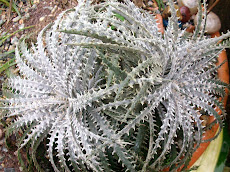
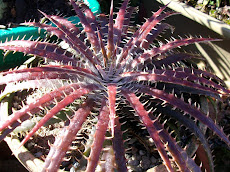
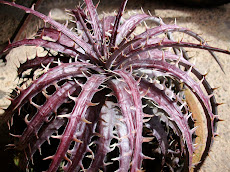
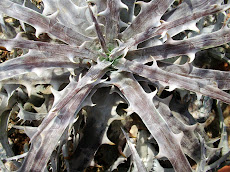
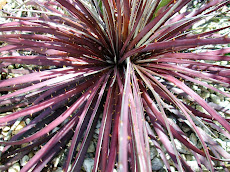
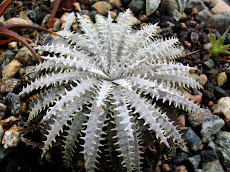
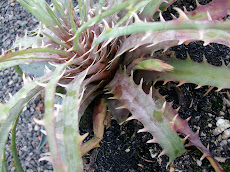
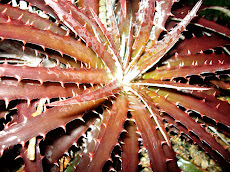
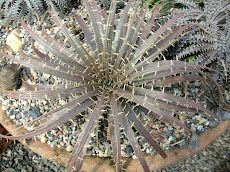
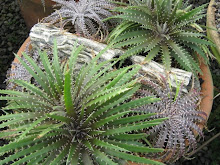
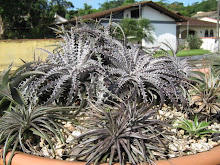
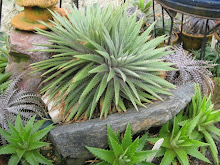
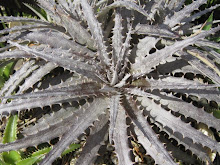
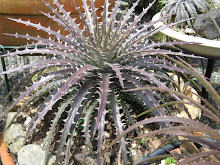
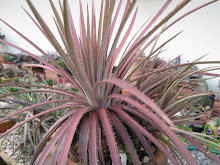
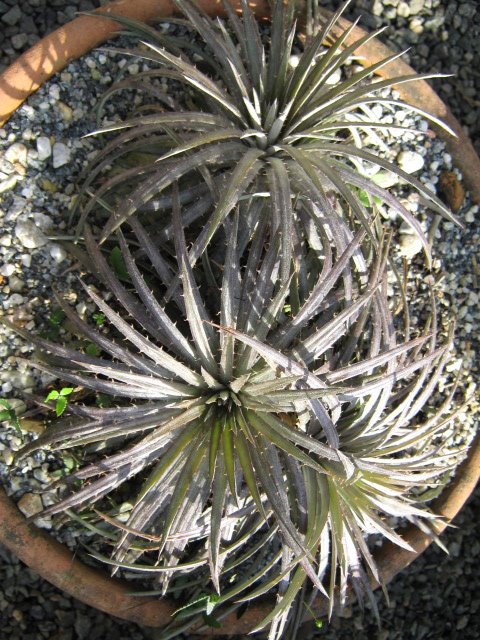
A very small Dyckia sp from São Bento do Sul in Santa Catarina


This is another unknown and unnamed Dyckia native to Northeast Santa Catarina.
Native to Lençol in São Bento do Sul - SC.
It does not grow larger than a few centimeters.
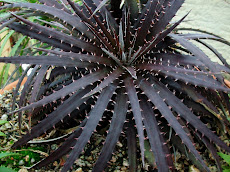
Blooms in yellow flowers and there is a very dark rubra form.
This is a very beautiful dwarf plant and would fit any sunny windowsill.

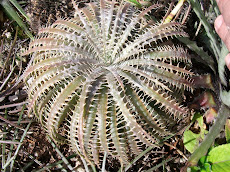
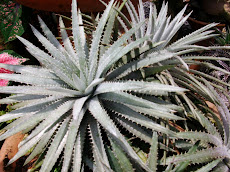
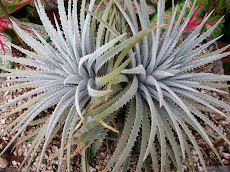
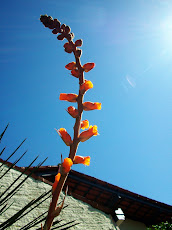
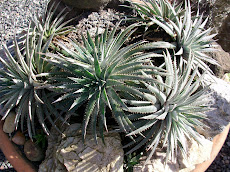
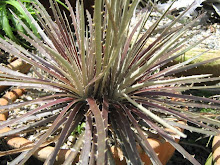
Dyckia limae - Pernambuco


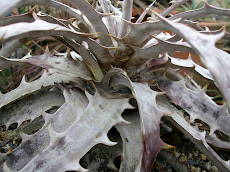
Dyckia limae, here setting flower stalk and cloning.
Native to Pernambuco in Northeast Brazil


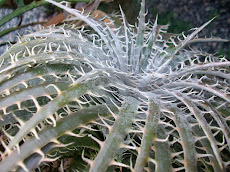
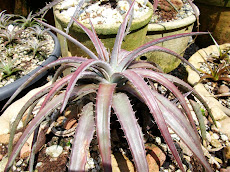
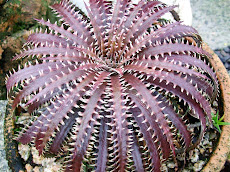
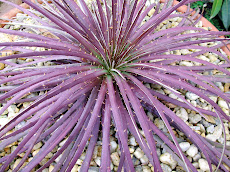
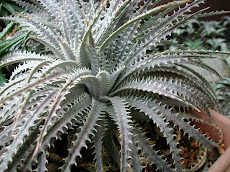
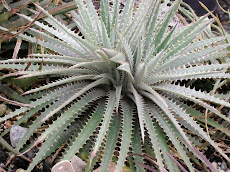
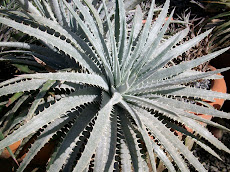
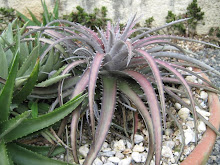
Dyckia sickii

Dyckia sickii
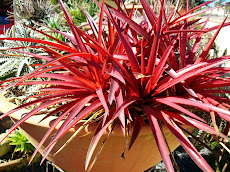
From Southwest Pará this is one of the Northermost Dyckias.
Rare, succulent and beautiful.
Here you can seed it is in the mood for love...emiting its first flower stalk.


Aug 27, 2009

Severe Fungi Attack

Fungus are everywhere and depending on where they are they turn into a pest or a blessing.We ourselves rely on fungi to live. Without fungi there was no life on Earth.
Fungi produce antibiotics that saved million of lives since The Second World War and also make the unresistable foetid French cheese that cost a fortune here.

On plants they may cause death and they can kill us too.
This plant here is a Dyckia from Eastern Minas Gerais and if you enlarge the picture you will see the errors comitted here.
There are fungi and algae growth on the plant and this indicates bad culture.

The worst sin here was the intense umidity. We observe this in many ways or spots: on the leaves we see agae besides fungi, on the substrate there is a complete rain forest composed by ferns and mosses and this also means humidity. (Also some stray cacti seedlings)

What do do?
1 - Repot: just remove the pot and leave the roots untouchable. Fungi dies in a drier situation.
So there is no need to disturb the root system unless it is already damaged or the substrate is not adequated to a dry cultivation. I use a pottery pot ( not painted in nor out) the material must breath. Use a thick layer of drain. Do not use stones for drain. Stirophane is fine if you do not have cracked pottery pieces.
2 - Remove the ferns and other creatures as you are cultivating Dyckia and not a Bush Garden.
3 - Cut of the death or any death leaves. Cut! Do not tear them!If you remove death leaves by tearing then you will introduce the fungi inside the plant. This is sure death!
4 - Plant the patient in rich organic aerated substrate. Cover the substrate with pebbles in order to protect it from the light. Light may kill beneficial bacteria anf fungi that live in the substrate and produce many of the nutrients the patient will need to recover.
5 - Vaporize with a very fine spray all and parts of the patient with an anti-fungi solution you will make by yourself:
5.1 - Those super ultra effective systemic anti-fungi kill fungi and you with the very same efficiency. You may also need a complete Astronaut outfit to deal with that. Also rain will wash that thing and introduce it in your next creek. The fishmeal will poison you and me too. You will pollute half the world and most probably the plant will perish sooner than if left untreated.
Try a very effective domestic fungicide and bactericide made with phenol and pine oil.
The commercial name may vary but it is something as SunPine.
5.2 - Use a solution of 25ml per liter of water.
Add 5 drop s of a liquid domestic detergent to favor contact of the solution with the plant tissues.
Do not drink nor wash the eyes and this will be fine.
Spray the plant everywhere even on that hidden secret and secretive parts. Do this in a shadowed place.
The day after bring the plant to a well ventilated sunny spot.
You may repeat this and the fungi will not disappear as magic but it will have a hard time to survive. The plant will be fine and will thank you and the most import: you will survive!.
Test the product before using on a rare hard to get plant.

The best medicine ever is prevention.
Dyckias native to the Central area of Brazil usually do not know how to cope with humidity as do the Southern native ones. Central Brazil Dyckias when cultivated here in South where the air humidity is always high (more than 90%) they are attacked by fungi.
Those Dyckias do not know how to cope with humidity, a more shadowed and cold weather. Not long ago it was said to be impossible to cultivate those plants in Joinville.
The trick is drainage, elevated position ( lift up the plant.) and an aerated substrate.

The secret here is:
A happy plant will hardly get ill!
There is no magic but the magic wand is knowledge.
Nothing compares to Light!
Happy creatures are peaceful, healthy and beautiful...
Be happy!


Dyckia sp Lagoão-RS


This is another true beauty true species and unnamed from
Rio Grande do Sul

Blooming Dyckia gloriosa

Dyckia gloriosa

Species!
It was found in Campo Alegre in Santa Catarina and shadowed by a small distorted shrub.
Shadow won´t propitiate the red in Dyckias. Shadowed Dyckias ted to get green in
order to compensate the lack of the good light.
This intrigued me at once.
Also shadow tends to elongate the leaves but is has produced even longer leaves
being kept in open Sun spot.
Also I thought the plant color would fade in winter or out of blooming season but
it is always rich red wine.
Only the very center of the growing area is kept somewhat greenish.
No doubt: This is a sight to behold!


This is the only clump of Dyckia gloriosa I know.
These are all green plants.
The re one is a true rubra variety.


Dyckia gloriosa in the mood for blooming.
This may be the rarest of all Dyckias and also one of the most beautiful.
Here it is blooming by the second time this year.
The plant will be isolated to ensure true sel pollinated seeds.
This baby keeps me in deep love to it.
The glorious gorgeous Dyckia gloriosa.

Dyckia dawsoni + Dyckia chorestaminea = Dyckia Spider Witch


Dyckia dawsoni + Dyckia chorestaminea

The nightstand here produced one of the most flowers productive
Dyckia.


Shadow appears looking for his Madam Mim...


During Summer this clump of Dyckia Spider Witch
turns into a rich reddish color.

Dyclia Spider Witch flowers


Dyckia Spider Witch flowers

Note the flowers are just the same in shape and color as those of Dyckia chorestaminea
but the flower stalks are those of Dyckia dawsoni

New baby from Central Brazil - Minas Gerais


Dyckia sp from East Minas Gerais - Serra do Cipó

This is almost unknown to me.
It seems to be a Dyckia goehringii affinis but this is just guessing
as this is a young adult plant. It is a nice new achievement.Much succulent and
very nicely colored plant.


Aug 26, 2009

Red spined Dyckia monticola

Dyckia monticola

The red spined form of Dyckia monticola is found in Notheastern Santa Catarina.
It is a mediun sized Dyckia, very compact and a sight to behold.
The silver underleaves contrast well and adds beauty to this
charming species.

Posted by Picasa

Dyckia sp from Campo Alegre


This unnamed Dyckia species grows
downtown Campo Alegre in Santa Catarina. It also can get redder than we see here.
The red color is not stable and the plant gets back to its greenish color when the winter comes. The red coloration is a way the plant faces the scorching Summer Sun.
Posted by Picasa

Dyckia cabrerae


Dycka cabrerae var. rubra
This is another rare and beautiful Dyckia native to Santa Catarina.
This plant face a winter full of frosts and temperatures around and below freezing.
Native to Campos de Lages in the highlands of Santa Catarina.

Posted by Picasa

Dyckia fosteriana nivosa - Lapa-PR


Dyckia fosteriana nivosa is a very small Dyckia species.
One of the most outstanding plants in spite of being small.
Seeds are also smaller that the Dyckia fosterian type.
Flower stalks and the flowers are all much smaller
A cutie cutie Dyckia and a true species.
It was find thriving on an rocky outcrop amid a fig plantation
in Lapa-Paraná. No other Dyckia fosteriana nivosa population
was found in wilderness. This only one population is now under extreme
care and protection of the landlord.

Dyckia goehringii half breeds


The seed that generated these beautiful plants were taken from a Dyckia goehringii
flower stalk fruit but this alone is not any guarantee of true Dyckia goehringii seedlings.
Dyckia goehringii is not a self compatible plant so open pollinating Dyckia goehringii flowers close to other Dyckias species flowers is sure crossing.
These plants are beautiful but they are half breeds.
Dyckia goehringii is a very different plant.


Dyckia goehringii


Dyckia goehringii

Gorgeous and absolutely rare.
It is a natural cloner ant this guarantee the true form to go on.
I have seen half Dyckia goehring being pointed as true Dyckia goehringii.
This is common abroad and the seeds that produced those seedlings taken
as true Dyckia goehring were possibly open fertilized in a garden or aficcionist collector.


Dyckia grandidentata


Dyckia grandidentata
( grand = big and dentata = toothed)

The plant clones madly.
The spines are not that big to deserve naming based on those.
Dyckias bearing bigger teeth are well known.
Aside this the plant is a true charm. Lives on the harsh Cerrado climate.
Suffers a annual dry period and flowers do not open fully to protect the
feminine parts of the flowers.
The plant gets even redder than this during Summer.


Dyckia argentea


Dyckia braunii


Dyckia joanae-marcioi


Dyckia lindelvadeae


Dyckia marnier-lapostollei
Posted by Picasa


Dyckia argentea one more taxonomic shinning pearl...


Dyckia argentea but....the correct would be Dyckia sp from Southeast Minas Gerais.

Taxonomic problems related to Dyckias come from long ago and most of them come from the fact taxonomists do not keep the plant alive and observe it. The goal was to describe dismantling (destroying)the plant and killing some more turned into termite dried food kept into drawers. A beautiful drawing and a painting, DNA description, a the live plant in a public botanic garden would do much better. In 1885 a clever botanist described a Mexican Hechtia as Dyckia argentea and the mistake still goes on.
This plant here come from Southeast Minas Gerais. In fact, this plant is a nameless one ´cause Dyckia argentea does not exist as the name is one more shinning pearl in the long taxonomic errors string. This pearl collar hangs in three volutes down to the science belly button.


Aug 25, 2009

Dyckia reitzii an outstanding Plant


This Dyckia reitzii is about blooming by the very first time in my garden.
Dyckia reitzii flower is for sure one of the most striking of all.
Observe the silver scale coat is getting thicker.
You may compare with the older posts of it.
The plant is now protected from the heavy rain and the tendency is to be well covered with a thick coat of silver scales. The description of this plant also presents some problems.
Father Raulino Reitz described this plant as having scales only on the lower face of the leaves.
The upper leaves surface he described as being sole green. The plant we see here comes from the very same place the type plant came from: Campo dos Padres in Urubici, Santa Catarina.
This is a problem found in many Dyckia descriptions. Taxonomists did not cultivated the plants
they described or did not cultivated the plants as it should be or long enough or even did not observed the plant in nature for long enough or even in cultivation for long enough.
Dyckias have many faces and masks and the notorious ability of foolishing taxonomists.
Taxonomists have to be skilled gardeners in order to describe with less chance of errors a new Dyckia species. Dyckias fascinate me in many many ways, this is one of them.