Apr 24, 2009

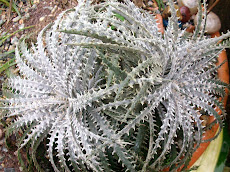
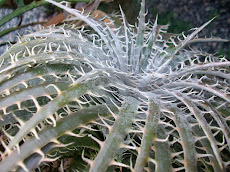
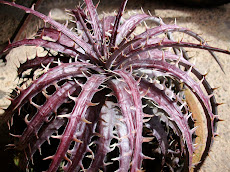
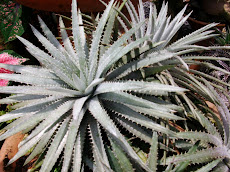
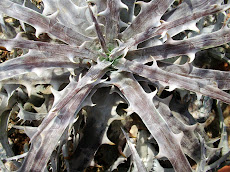
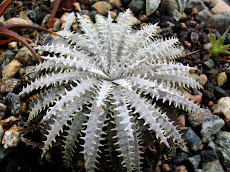
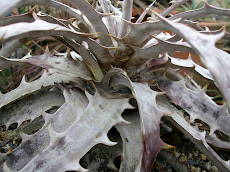
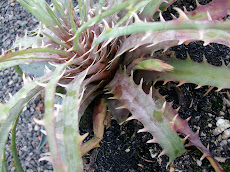
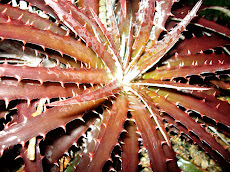
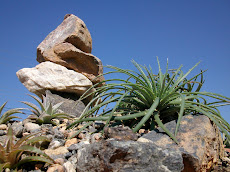
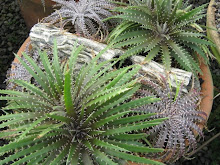
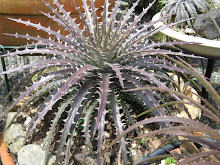
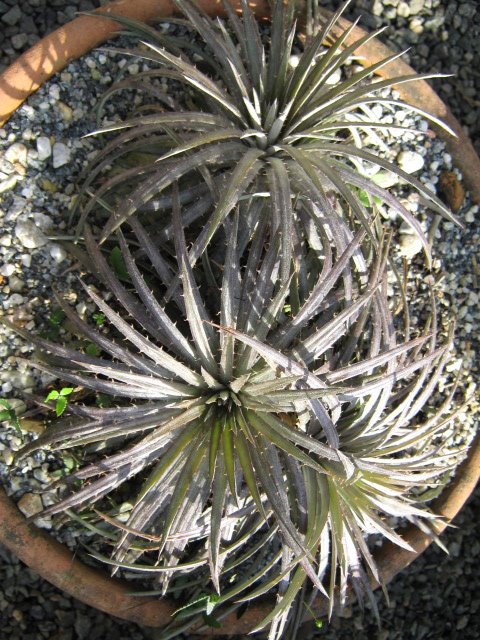
Dyckia delicata


Dyckia delicata
An extremely beautiful southern species.
Click on the picture, you will enjoy all the details.
The spines are soft hence the name.

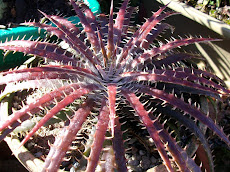
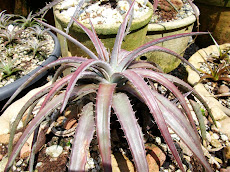
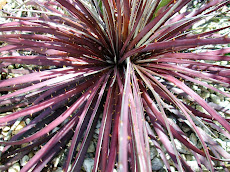
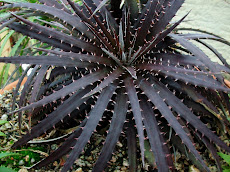
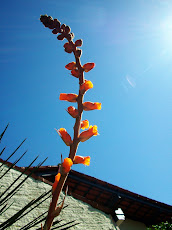
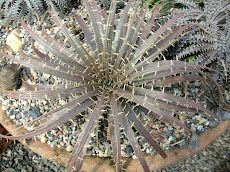
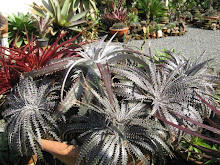
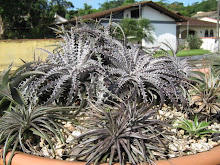
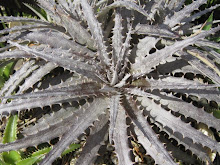
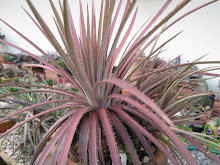
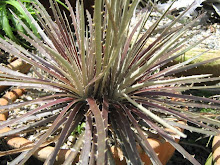
Dyckia nigripinis


Dyckia nigripinis
Black spine Dyckia

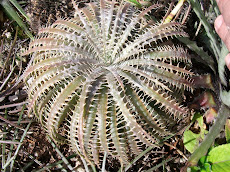
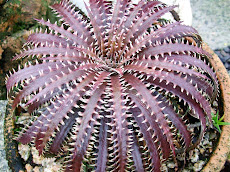
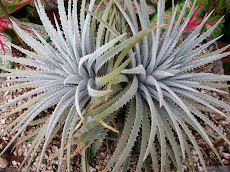
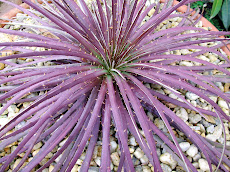
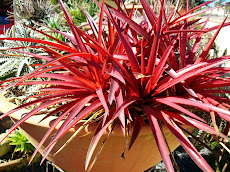
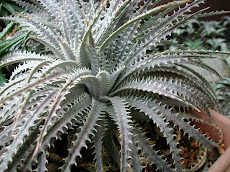
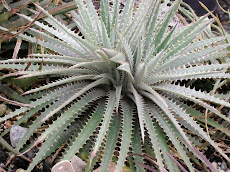
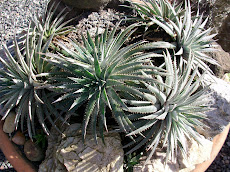
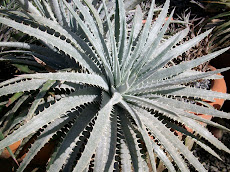
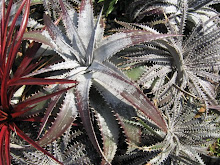
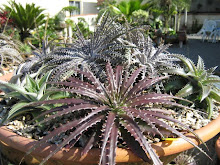
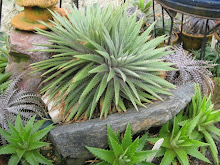
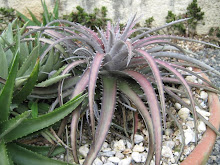
Dyckia Apolônia, a Brazilian made Hybrid


Dyckia gradea X Dyckia brevifolia

Still much to go ahead but yet a lot of beauty is revealed.


Apr 22, 2009

Dyckia hybrid


Dyckia marnier-lapostollei X Dyckia platyphylla

Here it was used two Brazilian wide leaved Dyckias.
They are native to different places some thousand kilometer apart from each other.
this plant would never exist without a helping human hand.
Dyckias are easy goers and it is not any difficult to get them together.
As they are from different regions the flower in different times. to get them together and in blooming stage you need a magic wand and one ought to be stimulated to bloom out of season.
The lovers must be isolated from any other intruder or you will never know who is who in the descent generation.


The result from such a crossing may not be an army of equal individuals but an army
of no equal ones. Every seedling may be different from one the other.
Some may result in drab no desired plants, most may be faint not aesthetic plants, many may be beautiful plants, some may be astonishing beautiful ones and one or another may be out of anyone´s mind.... True Dream Dyckia.
Yes just a very few may be that way.
Even that plant may not come out from the first batch or the first crossing.
Do not give up, try again and again.

..and remember a dyckia will never show the last mask until flowering....
Them, with the very first bloom you will get to know the final appearance of your Dream Dyckia.


Apr 21, 2009

Dyckia sp - Cachoeira do Apiacás - MT


Small, new and beautiful fresh air
in the Dyckia World


Dyckia lindelvaldeae foetid flowers


Look,here this beauty is producing four flower stems.
No one would tell such a magnificent plant would produce
flowers smelling so devastatingly bad.


Dyckia lindelvaldeae

The fetid pretty lady


Dyckia lindelvaldeae

Small and extremely beautiful these babies surprised me.
I ever heard they produce aromatic pleasant perfumed flowers but....
not these ones here!
The flowers are horrible fetid!
They smell something like old urine and sour armpit plus
a bit of rot shrimp, a hint of sour milk and a touch of a satisfied vulture breath, also some
rotting crab notes.

This plant may rely on mops to fertilize them.
They even do not open... I wonder if they did...


Dyckia goehringii and some of its faces and masks


Dyckia goehringii

As many other Dyckias species, this Brazilian marvel has more than just one face.
This one here, is almost white. Here the picture was taken in a rainy shadowed day.
This is a Dream Dyckia and extremely hard to find.
Teeth are impressive here. This is a young plant that never bloomed.
There is some improvement ahead.


This form below is far more common than the above form
in spite of being a rare species.


This form is so well camouflaged that it makes hard to be noticed mixed to
the surrounding in its habitat.
Here flowering by the first time.


This young plant is a wonder plant no doubt.


Dyckia sp - Painel - SC


Botanists and Dyckia lovers are deeply intrigued by these
new plants from Santa Catarina.
We are just seeing by the first time some of the most stunning Brazilian Dyckias.
Dyckia Perau da Cabrita is another recent discover and also astonishing.
This one here is still young and I already showed it here.
Note the spine and the color and notice the leaves, how broad they are. This species comes from the coldest part of Brazil.

Apr 20, 2009

Dyckia estevesii blooms


Here we see the sprouting of a clone from a Dyckia estevesii and
the sprouting of a flower spike too, all in the same plant.
As this plant is not self fertile it will need the alcove services
of a strange same species plant to breed true and any strange to produce hybrids.
If its alcove mate was produced from itself as this clone you see, the nuptials will be useless in terms of seed making.
Dyckia estevessi fall deeply in love to strangers! In a real talk they as any dyckia fall deeply in love to any other Dyckia. They are all easy goers.
In the case of this species if we want true seed we must have two different plants of the same species flowering in the same time and much...much luck.


Dyckia estevesii
about blooming

Some of the most striking and stunning Dyckias are Brazilian native.
Among these some special ones are Central Brazilian Cerrado native.
From this area that includes areas of Minas Gerais, Mato Grosso, Mato Grosso do Sul,
Bahia, Tocantins, Distrito Federal, Goiás States, come some real beauties as Dyckia estevessi, Dyckia lindelvaldeae, Dyckia marnier-lapostollei and so on.
Some of this Cerrado Dyckias are not self fertile. This means they can not produce seeds of their own if they are alone or the mate is a clone of itself, a relative.
They only produce seeds when in love to a strange. This strange maybe one of its own species or not. The second way produces hybrids.
so if you want pure strain seeds you have to have two individuals from same species and not a clone a plant that was produced by the very same plant.
So, to produce true seeds some species one need two same species and not cloned plants and obviously both at blooming time.
I would also say you will need a magic wand too.
Here I have two Dyckia estevessii beginning their flowers stalk at the same time and both ate the same level of development.
Maybe..maybe...I will get lucky enough to have plenty of Dyckia estevessi pure strain seeds.
...Oh..where is the magic wand?


Apr 19, 2009

Dyckia marnier-lapostollei


Dyckia marnier-lapostollei Minas Gerais native to
Specimens from Minas Gerais turn to be a bit more prominent toothed
an do not bear a saw blade like structure as the Bahia native to.
Mostly mistaken as the estevessi variety from which is distinguished only by flowers.
Flowers in the Dyckia marnier-lapostollei estevessi variety don´t open.


Dyckia marnier-lapostollei Bahia native to
In my opinion one of the prettiest.

These are young plants but they can get as big as an adult human head.


Dyckia marnier - lapostollei var. estevesii


Dyckia marnier-lapostollei var. estevessii

This variety of Dyckia marnier - lapostollei is recognized by its flowers.
All Dyckias marnier-lapostolei blooms in long semi erect and a bit branched flower stalk.
Their flowers are nothing to mention in terms of beauty in fact they are a true shame when we talk about flowers here with the Marniers Dyckias.
As they have a very wide wild territory they have some varieties not just this one here.
All varieties are superb plants and a deception in terms of flowers.
None bears flowers at plenty. Just some in a long slender stalk.
Some flowers are deep red and the majority of the varieties bears orange flowers.
This variety here Dyckia marnier-lapostollei var. estevessi doesn´t eve open well its flowers. The flower remains closed and just some contents are something as vomited out.
But, but...if the flowers are a shame the plant itself is stunning.
Ah, this is not self fertile!

Dyckia´s weird "motherhood"


These two plants here are true species, in fact superb Brazilian species.
Above you see Dyckia estevesii and down below you see Dyckia manier-lapostollei Bahia native.
Dyckias marniers have a huge territory invading three or four Brazilian States. They are never too many anywhere and they show some differences from region to region. This Bahia native is one of the prettiest and the rarest. It is blue/silver all over and instead of teeth it bears a saw blade like structure. It is also stronger than any and stuntier than the other Dyckia marnier.
Both Dyckias species here are well know abroad but let us do some thinking about Dyckia pupping ability:
The only easy way to produce clones is by side sprouting. This is done frequently by some species and rarely or never by others. Cloning is the only safe and certain way to reproduce the very same plant. In Dyckias, seeds are always, always very improbable. Dyckias seem to keep information from long ago times and eras and this information may come alive when the plant is removed from its site or get some special stimuli. There is too much left to be known in the Dyckia world. They are extremely difficult to be taxonomic classified and the academic Science committed many, many mistakes.
Safely, if my life depended on what is already known about Dyckias I would safely and without fear say: This is a beautiful Dyckia! or This is not as beautiful as that one! But this second statement is not as safe as the first. We have almost everything to be known about Dyckias. People and taxonomists have faced these plants with the same instruments as the other bromeliads were studied and this revealed to be useless.
This is very stimulant and thrives us to the Light.
True Science is based on curiosity and fears conformism.

But let us get back to these pictures here.
You see these plants are cloning. Each one guard their babies in a very different way.
Dyckia marnier have children in the darkness well guarded way deep under the strong leaves. The babies rarely see the sun and sun is life for Dyckias . They are extreme sun adorers.
Even in nature this strain of marnier is extremely rare. They allow all kinds of insects to live under their leaves and in many circumstances this kills the plant. Also its pups rarely survives the darkness and the plagues. So mother nature acts with wisdom. These pups are freed at the slightest touch. A rodents or any other animal may easily separate those pups from their mother. Ok, this sort of plant comportment must be studied.
Now look at the Dyckia estevesii puppies. They are facing the sun, the weather.
Now try to separate mother and the new plants, unless you have a good saw you will not separate them. Yet the marnier releases its children at the slightest touch even at tender age they are avidly set free.

Knowing is always a privilege. Dyckias invites you provokes you instigates you to get to know.
Wisdom does not come at easy, we have to conquer it, deserve it.
Light!
That is what we all should crave for.


Apr 18, 2009

Dyckia sp Northeastern Santa Catarina


Dyckia sp Bateias - SC
above.
This fantastic species brings the color of the lead when suffering.
This is extremely rare ´cause dyckias are usually red when dehydrated.
It well would be named Dyckia plumbea.
The flowers are yellow and big.
The spines are far apart from each other.


Dyckia sp - Bateias de Baixo - Campo Alegre - SC

A very fine species and the spines are close together.
Bears an almost lavanda pinkish color .

Perau da Cabrita - Canoas River - Santa Catarina Native to


Dyckia Perau da Cabrita
still a nameless species

This is a native species, a Santa Catarina one.
Santa Catarina is the home of some of the most striking
Dyckias species. This one is one of the most beautiful Brazilian Dyckias.
It was discovered thanks to the efforts of an Energy Dam Construction Company.
Otherwise this plant would take some decades to be seen by botanists.
Dyckias are hard to find. One ought to climb mountains in the middle of nowhere. An entrepreneur may face vibes, scorpions, spiders, yellow fever and many others perils even other human beings. Botanists rely mostly on bushmen to do the hard and dirty work and it may take ages before something like this comes to Light.
This energy Company made a very comprehensive fauna and flora survey of the flooded area.
The Company invested on this and found some very, very interesting novelties as this one here.
This beauty rested on the heights of a cliff facing The mighty Canoas River. With the up leveled waters the plant turned to be at a hand reachable distance. Before the flooding it was really impossible to reach the plants. there were fast running white waters and nobody could go up from down below. From up above not even a chopper could reach the plants.
I hope this beaut to bloom next spring, for now it is dividing heads.
There are two more varieties of this species, one totally silver and a green one.
I Expect to have all of them when this plant seeds germinate.
A Native Gorgeous Dream Dyckia!


Apr 17, 2009

Dyckia gradeae


Dyckia gradeae

A new breeze, fresh air in the Dyckia´s World


Dyckia gradeae

This is a new Dyckia species from North Central Cerrado in Goiás.
A very beautiful plant that blooms in conspicuous orange/red flowers.


For as long as I know this species does not pups easily and rely
propagation on its seeds.
I expect to have new Dream Dyckias crossing this species with Dyckia marnier
or Dyckia lindelvaldea as they all bloom at the same time.


Dyckia sp São Bento do Sul - SC


Dyckia sp São Bento do Sul - Santa Catarina

This is a small almost dwarf colorful Dyckia species.
Native to Northeastern Santa Catarina.
It is a rock dweller sun lover.
New to Science and botanists all over.
Makes small flower stalks but the flowers are big, orange and attractive.


Apr 16, 2009

Healthy Dyckia Roots


Click on the image to see an healthy Dyckia root.

These are the look a nice and healthy Dyckia root.
When dehydrated Dyckia roots die and the only portion to be seen is the central structure.
This central structure look like a fine wire. In this stage the root is died. In nature this death roots are used to hold substrate and hold the plant to the substrate. Those roots do no absorb anything. in those times Dickias feeds by the underside leaf stomata.

The healthy root must look like this one shown here.
If you let the substrate dry out completely the first plant structure to perish is the root system.
Dyckia do like water. This root is on the surface of the substrate ´cause there was a stone on it and under the stone always stays put some humidity. That root went there to take it.
When a root is like this it is very much breakable. It breaks like glass.

Apr 15, 2009

Dyckia argentea rubra, by request


Dyckia argentea


Dyckia argentea

Here you see young ones.
One Dyckia gets better and better as the time passes by.
Time does wonders to any Dyckia.
So imagine these into one or two years...breathtakingly beautiful rare Dyckias.


Dyckia argentea rubra


Dyckia argentea rubra

An elephant, a polka doted pink elephant is less rare than this plant here.
So take a long look on it.
Click the images.
all very young plants all with much to improve.


These are Dyckia argentea rubra young plants.
They are extremely rare
The track to its habitat was lost and the description contain intentional errors.
This is a typical example when science instead of Light spreads shadow.
Some botanist even insist on saying this plant does not exist.
so take a good look at this Marvelous Phantom Dyckia Argentea rubra.