Mar 28, 2009
Mar 27, 2009
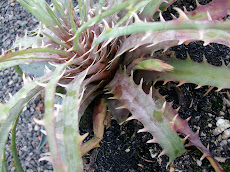
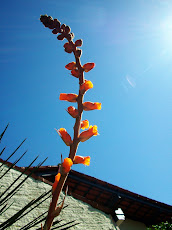
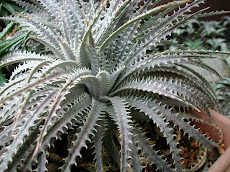
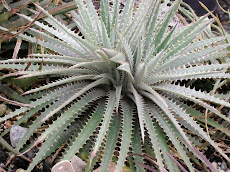
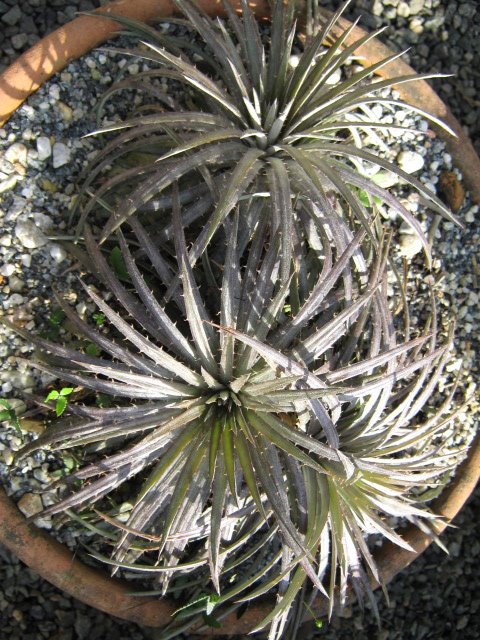
Dyckia sp - Pedra Branca - Tabaí-RS
Mar 26, 2009
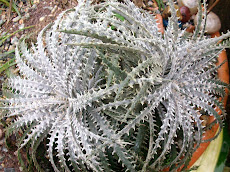
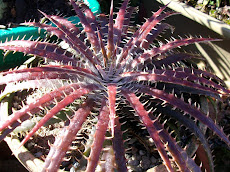
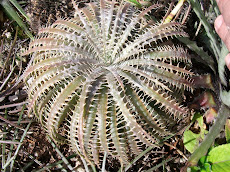
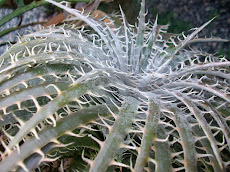
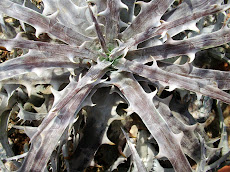
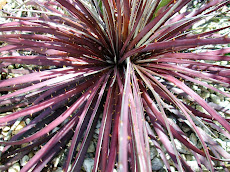
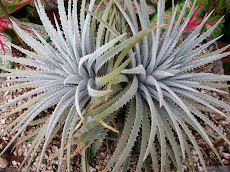
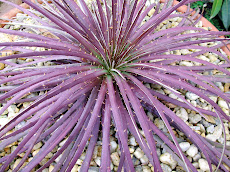
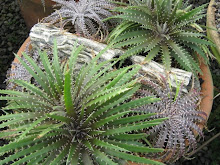
Dyckia pectinata the comb Dyckia

Dyckia pectinata
This baby bears soft rubbery spines.
Bad swimmer and lousy flier it is extremely hard to be found anywhere.
This baby is a only one here and maybe it is not a self breeder.
But once in flower there will be some other baby in bloom and interested on some torrid night stands with this beauty.
Comes from Southeastern Brazil.
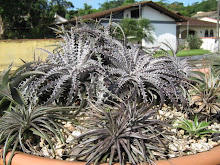
Dyckia goehringii cultivated plants

These are not Dyckia goehring absolutely not!
These plants came from Dyckia goehring seeds, certainly.
But this does not mean these are Dyckia goehringii.
This is quite common among cultivated plants.
Dyckias are easy goers and sex maniacs. The collector may have many other Dyckias in bloom at the same time so....
This is an accidental hybrid : Dyckia goehring X God knows what.
Next post shows you what a Dyckia goehring looks like.
Ah, these two here are also Dream Dyckias! They are explendid Dyckias but they are hybrids,
accidental hybrids.
These two pictures are huge, click on them.
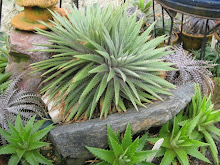
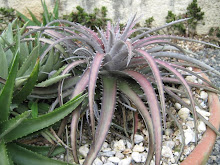
Dyckia goehringii a Dream Dyckia

The above plant is just beginning to recover and
adapt to the new living conditions.
This species is one of the most beautiful of all Dyckias.
This bone like plant is a real one.
Not an hybrid!!!
Not an hybrid!!!

Here you see two of the tree faces os this gorgeous Dyckia.
These are wonders of the Dyckia World.
Here down south Brazil, one needs some skills and bit of the pirlipimpim
magic dust to achieve success with certain Central Brazil plants.
This is one of them.
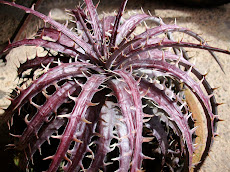
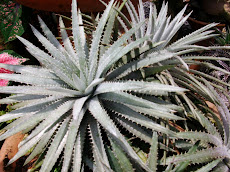
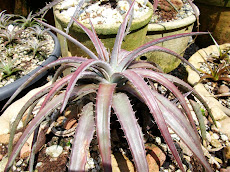
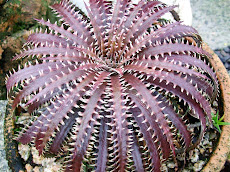
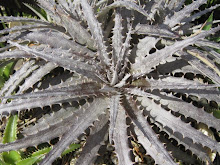
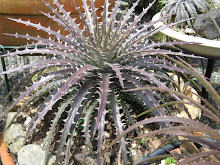
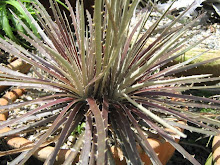
Dyckia sp - Caxias do Sul

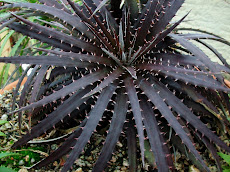
The pictures have problems here but you can see the spines and the two colors of them.
The down side is is deep black and the upper side is silvery or silver scaled.
This is a big plant and a very colorful one.
Grows attached to one big stone by the side of heavy duty road.
Seeds are seed bird like. flowers in huge heavily branched flower spike.
Click on the pictures to seed them huge and in spite of the technical problems it is worth to see the pics.
A new Monster Dyckia sp...

This one here in the picture is a baby a little baby.
This dyckia comes from Rio Grande do Sul.
We say Dyckia sp - Roca Sales
Take a breath, a deep one: this colossal dyckia grows to a 2 meters wide rosette.
This is not big, this is huge!
Yellow tiny flowers in a sky rocketing spike.
The plant can get dark wine in dried times.
The morning after the raining night

...and it rained during the night.
Dyckias just love a rainy night.
Water is the source of life.
Here a new species from Rio Grande do Sul.
Lives close to Dyckia delicata, another gem from the cliff.
Mar 25, 2009
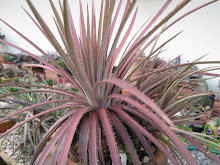
Dyckia Brasília, my Dream Dyckia

Dyckia Brasília
My sister Brasília loved the Magueira, a Samba School from Rio de Janeiro.
The School colors are green and pink so this is Dyckia Brasília.
My dream Dyckia.
It is one out of more than two thousand seedlings of Dyckia marnier-lapostolei from Brahia
and Dyckia brevifolia from Santa Catarina.
My sister Brasília loved the Magueira, a Samba School from Rio de Janeiro.
The School colors are green and pink so this is Dyckia Brasília.
My dream Dyckia.
It is one out of more than two thousand seedlings of Dyckia marnier-lapostolei from Brahia
and Dyckia brevifolia from Santa Catarina.
The pink spines come from Dyckia marnier-lapostollei from Bahia.
This is a only one plant and has much to grow.
Dyckias are like wine, they get better by the time.
Imagine this plant two years ahead from now...
This is a only one plant and has much to grow.
Dyckias are like wine, they get better by the time.
Dyckia richardii

The plant clones itself so readily, as you see,
there is no need to worry with seeds unless
you have a way to hybridise this little fellow.
Sure some improvements would do great here.
These big fruits are hybridized this baby
had a night stand affair with with a Dyckia sp from Santa Catarina.
What about some more color?
Maybe a bit more silver and spines to match.
..a Dream Dyckia does not come so easily.
..and the lady?
Humm...the lady is a tramp( ...or a trap maybe.)
Dyckia brevifolia Izabel and Dyckia Picante
Mar 24, 2009
Dyckia marnier-lapostollei wild form from Bahia

Dyckia marnier-lapostollei from Bahia
This is the form most easily seen abroad. A magnificent plant and always a Dream Dyckia.
Note here the flowers spike has almost no bractea. The teeth form a saw like edge.
This plant hates tap water inside the rosette. Melts easily. So people come to the wrong conclusion the plant needs almost no water. This is also false. The plant enjoys water but acid soft water and no the hard basic you may have in the pipes.
Soft water is the water without dissolved salts, like rain water.
Use rain water kept with some peat in it. The plant will love it and you will notice. Stop that plant suffering for nothing. Water you marnier. It will be a magnificent plant and that shrinked one.
Dyckia marnier-lapostollei long leavead wild form
Dyckia marnier-lapostollei wild long leaved form
Dyckia marnier has a wide wild habitat. It occurs in three Brazilian States.
Minas Gerais, Bahia, Goiás and some people believes it may be found in West of MatoGrosso.
Recently one habitat was found close to Brasília our Federal Capital.
This one here bears long floral bracteas as you can see.
This is today most sought after Dyckia marnier-lapostollei.
Fruits take a long , long time to ripe. The last one spike of this plant held the fruits for over six months before the seeds were ready.
Dyckia marnier has a wide wild habitat. It occurs in three Brazilian States.
Minas Gerais, Bahia, Goiás and some people believes it may be found in West of MatoGrosso.
Recently one habitat was found close to Brasília our Federal Capital.
This one here bears long floral bracteas as you can see.
This is today most sought after Dyckia marnier-lapostollei.
Fruits take a long , long time to ripe. The last one spike of this plant held the fruits for over six months before the seeds were ready.
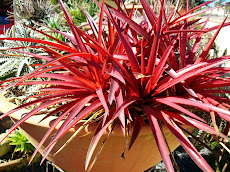
Northeastern Santa Catarina Red wide leaves...
Mar 23, 2009
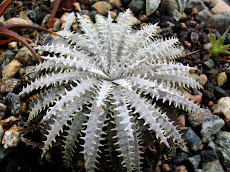
Dyckia dussenii - olive form

Plants are capable of strategies you would not believe.
Nature does not waste energy doing a meaningless structure. Every detail has a reason to exist.
Everything has a reason and a good one. Those Dyckias, in case Dyckia dussenii has a reason to have silvery leaf undersides:
Protection from the scorching sun during dry times.
But this should happen on the leavers and not under, ok?
No! The plant when stressed by dehydration lifts the leaves up, so facing the sun with the silvery undersides of the leaves and making a shield for the growing area of the plant.
Plant behaviour?
Yes!!!!!!
Dyckia sp from santa Catarina


The perfect strategy:
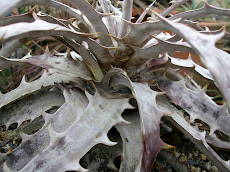
This baby is a sight to behold and one of the silveriest leaf undersides among Santa Catarina Dyckias.
The plant uses this to reflect the sun during hard times. When dehydrating occurs the plant lifts up its leaves and protects the growing area from burning . This way the plant forms a shield with the growing fragile point inside.

Dyckias frequently sacrifices parts of themselves in order to protect the growing point.
The tips of the leaves or the whole leaf may be sacrificed in order to give water and nourishment
to the fragile center of the plant. Roots are also used this way and frequently a Plant in wilderness bears just hairy dried roots. Normal absorbing roots are light colored and as fragile as fine crystal, you touch and it breaks easily.

Subscribe to:
Posts (Atom)