Apr 1, 2010

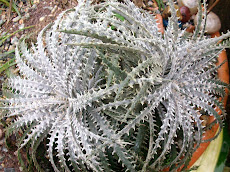
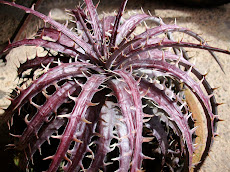
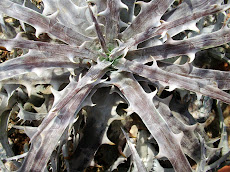
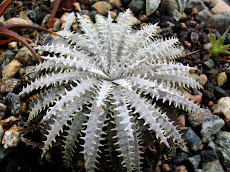
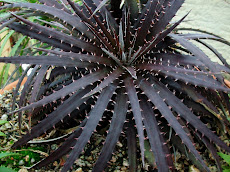
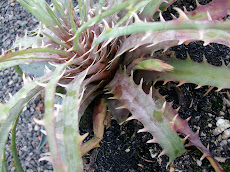
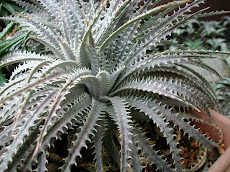
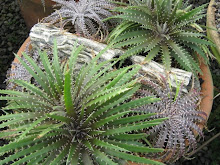
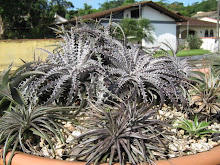
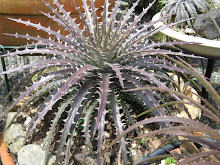
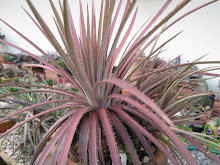
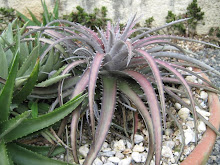
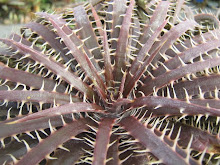
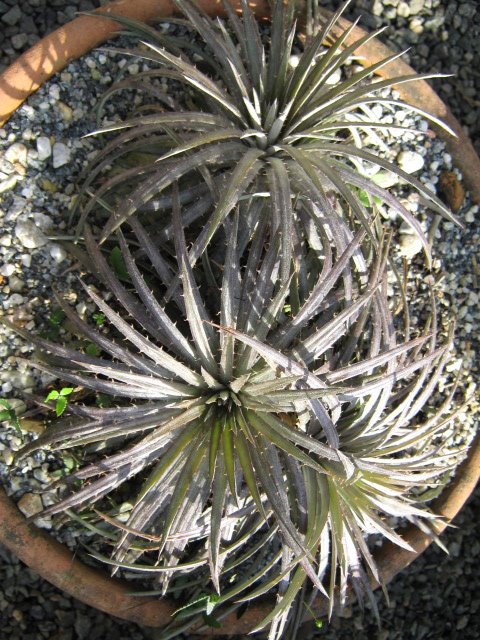
Dyckia noelii

Dyckia noelii is a Sata Catatrina native rock dweller and one of most beautiful ones.
These plants here were almost killed by a erroneous anti-fungi treatment.
Now the plants are recouvering and doing well again.
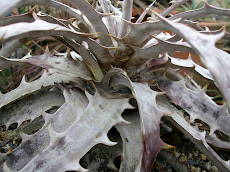
The underleaves are all bronze patina and not silver.


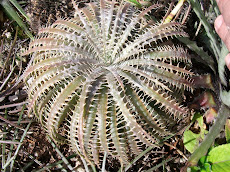
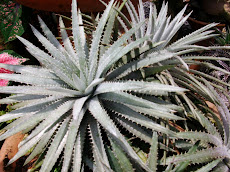
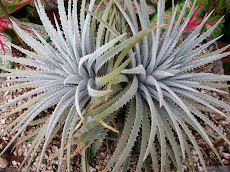
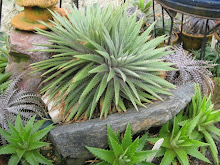
Dyckia delicata cyanophylla

Dyckia delicata cyanophylla
This is also yet to be described and it all seems this is the biggest of all Dyckia delicatas forms.


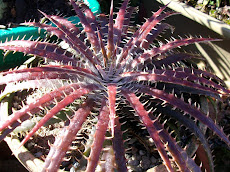
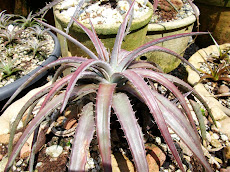
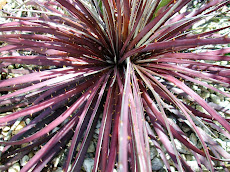
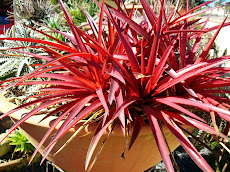
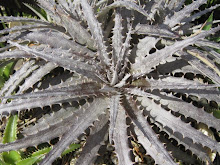
Dyckia delicada rubra

Dyckia delicata rubra
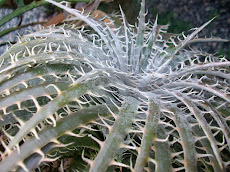
All delicata forms deserve a better understanding and a deeper study.


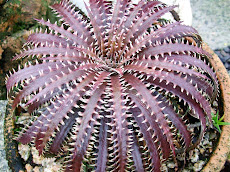
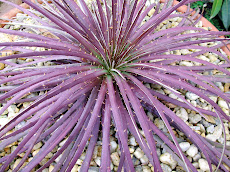
Dyckia delicata rubra

Dyckia delicata rubra 
Grows right amid the type delicata plants and it is not described yet.
No one seems to have noticed the rubra ones.
Dyckia delicata rubra is a superb form of Dyckia delicata.


Some hybrids are so....so...so beautiful....

Dyckia lindelvaldeae  X  Dyckia pectinata = Dyckia Tante

Dyclia goehringii  X  Dyckia pectinata = Unnamed Dyckia


Dyckia fosteriana X Dyckia fosteriana

Dyckia fosteriana X  Dyckia fosteriana
Two regional fosteriana varieties got together to create this  wonder in leaves...


Dyckia lindelvaldeae ......fantastic to say the least here.

Dyckia lindelvaldeae 

Small and absolutely striking this plant favores a legend here in Brazil.
The legend says here in Brazil that the plant was sent abroad for description
and scientist were so turned on by its beauty they kept them alive instead transforming them into 
dried straw inside a drawer to be eaten by termits years ahead.
If this is true...congratulations to Science..at least this time Botany did fine and indeed!

Its flores are scentes and the flowers stalks are very short.
They are not self fertile plants.


Dyckia Tarzan...another Bill Baker jewel.

Dyckia Tarzan
This here is a young plant.
Note that in spite of being extremel silver scale coated it still shines as
a waxed Dyckia.


Dyckia Son of Tarzan

Dyckia Son of Tarzan an everybody´s dream
Bill Baker dreamed before any...


Dyckia Toothy Wolfgang
Bill Baker


Dyckia Bill Paylen
Bill Baker´s gem


Dyckia species Lagoão Area Rio Grande do Sul

this plant shows some looks close to those of a Dyckia delicata but it is not one of them.
Its spines are hard and it grows some  twenty kilometrs ahead West from Dyckia delicata habitat.
It well may present some similarity and be a Dyckia species delicata affinis.
The lead color is a striking point here.


Bill Baker´s masterpiece Dyckia Brittle Star.
There is just one Brittle Star look, this one.
Hybrid Dyckias do not duplicate by seeds but by cloning only.
This is done naturally when the plant shoots, sprouts or divides itself or by culturing tissue.
I will try Bil´s Brittle Star with Dyckia from Painel....what about?


Dyckia species from Painel - Santa Catarina

This impressive plant comes from a veru cold region in Santa Catarina in fact the most cold one.
Frozes are sever in there. The plant recieve the heat from the river below.


These are the very same plant!
Above: the plant is full with dew.
Below: the plant drying with the morning Sun.


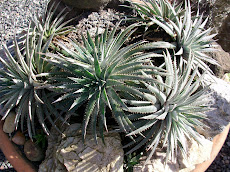
Dyckia delicata....how could one not to fall in love....

Species! ..and what a marvelous one!
Brazilian and yet better: a Southern species!
This means a higher toleration to coldness and less need of a too elevated brightness.
Would you resist to this?
I couldn´t and I wouldn´t....
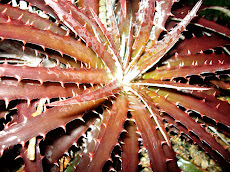
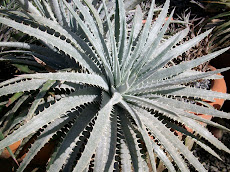
Dyckia delicata

Look, look....look in there....

I´ve told you...it is magic!
Look the silver boiling in there...look...
The Druids used that silver to make you look good forever.....
Look.....

Dyckia goehring X Dyckia pectinata

The flowering beauty in the break of the day...


Dyckia fosteriana... a perfect diamond crown

Dyckias when armed into such structures or arrangments  garantee some degree of umidity to the plant. These crown like Dyckias can cope more easier witha a water depraved environment.
All these arched leaves hold the water in ther air around and within the canopy.
 
Here one can also see the plant iniciating head division.
Some plants cluding this  fosteriana regional variety use this as the only way for cloning itself.
Also this is a way the specimes find to cope wut the water that stucks in the very center of the crown.
The water does not get trapped there if the plant is inclinded.
These head divisions make very attractive mirror effect.


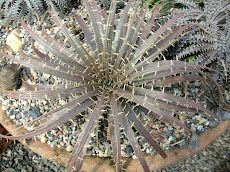
Dyckia delicata crown by the early morning ...still with dew covered

Some Dyckias make these perfect crown like structures. This is a way to protect the plant from the fiercing Sun and create a micro climate tht preserves the umidity in the air around the foliage.
This umidity is taken by the indument present on and under the leaves.
Highly indumented or scaled plants are more apt to survoive watger hostile enviroment as they can absorb more efficiently the water present in the atmosphere.

Spines are not meant for defense they are structures that dissipate heat and help the conpy to hold the more umid air around the plant.
We must observe Dyckias a lot more in order to understand these magnificent beings.
Nothing is worthless in Nature, for nothing or no proposal. Nature has no energy to be spent for nothing. There is no wasting here.