Sep 3, 2009

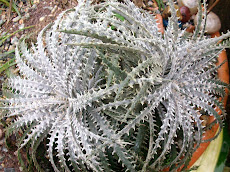
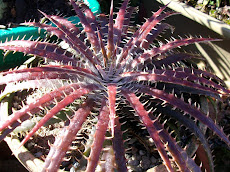
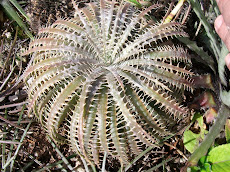
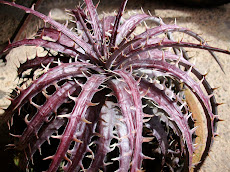
New Fan Dyckia in South


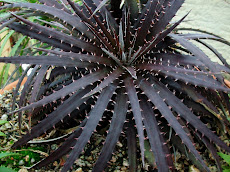
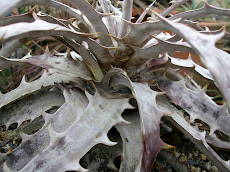
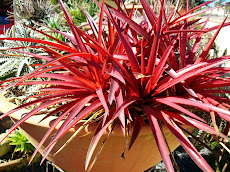
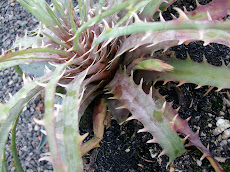
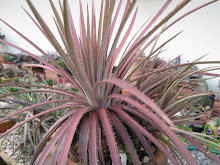
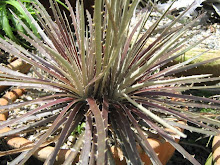
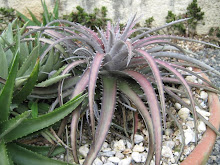
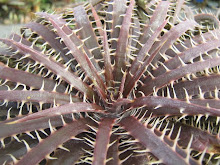
A VERY MYSTERIOUS PLANT
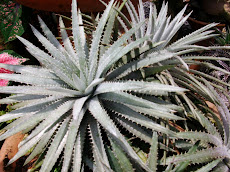
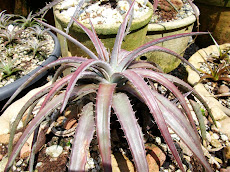
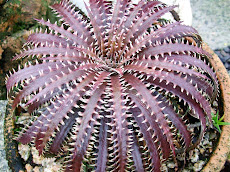
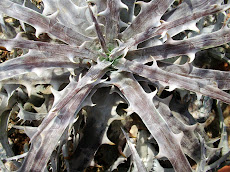
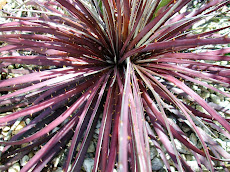
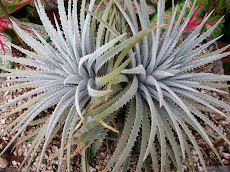
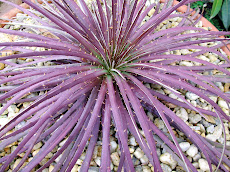
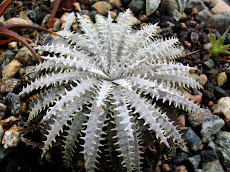
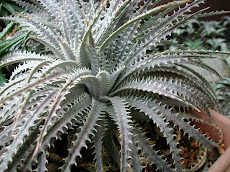
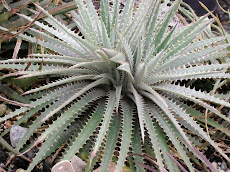
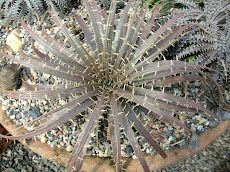
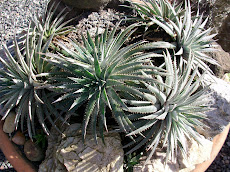
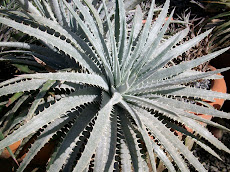
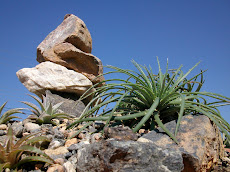
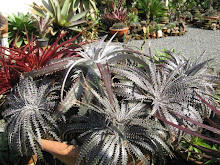
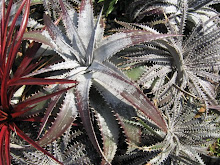
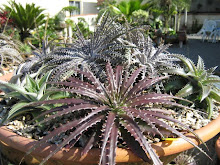
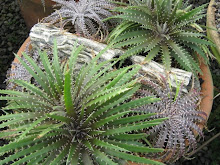
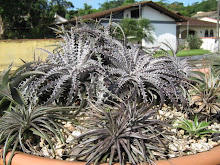
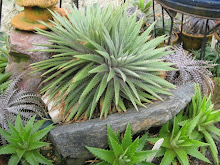
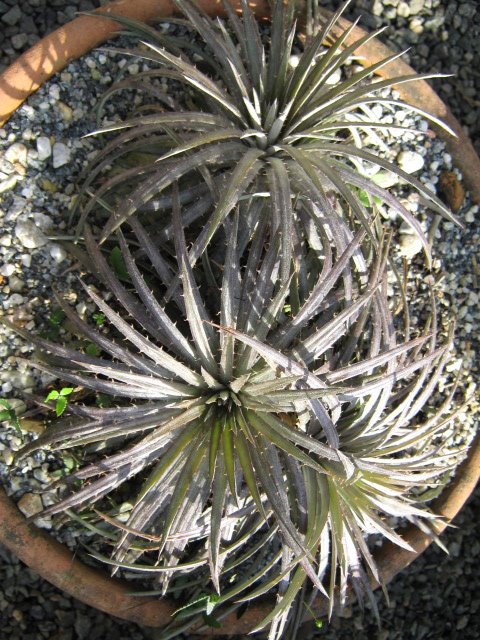
These are two years old pictures. These plants were just collected by a bushman in Ibirama - Santa Catarina.
Here we see them just planted in his garden.
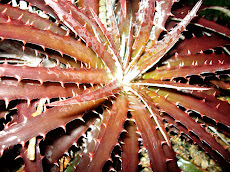
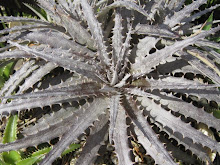
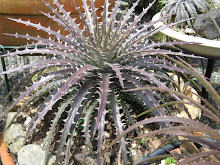
None has ever heard about these plants ad the leaves looked close to the Dyckia encholirioides leaves. Dyckia encholirioides next habitat is more then a hundred kilometers apart in a straight line.
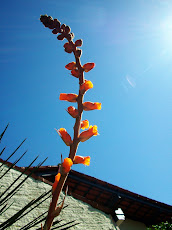
The flowers are very pale yellow and the plants are huge! They can reach 2 meters high and not taken the flower spike in count for this.


Posted by Picasa

Sep 2, 2009

Dyckia ibiramensis

Dyckia ibiramensis

This is the biggest reofitic Dyckia of all.
Lives on rocks close to the Hercílio River (Also known as Itajaí do Norte River.) white waters
in Ibirama, Santa Catarina.
This plants here clones like mad.
This Spring we shall make the very first hybrids using Dyckia ibiramensis as pollen donor and also as pollen receptor.

Dyckia companion - Cattleya intermedia orlata

Cattleya intermedia orlata

This world famous Orchid lives close to Dyckia ibiramensis. It is the green Dyckia behind the Orchid in the picture. In nature it is on big tree branches that grows on the Hercílio River.
This Orchid may be also a rock dweller and was found on big rocks close to the river.
The best Catleya intermedia in nature are all from Ibirama region in Santa Catarina.
This Orchid can take as much Sun as the Dyckia and the more sun it recieves the better blooms.
This orlata is a nature plant. The we have the ardosia (slate) type and even a perfect Catleya intermedia alba.

Dyckia argentea is a name given to a Hecthia so the name is not valid.


Dyckia sp from Serra do Lenheiro - MG

In fact Dyckia argentea does not exist and never did. The plant described as Dyckia argentea was a Mexican Hecthia. Just one more lustrous Botanics pearl.
This is what should be as close as possible from the fictitious Dyckia argentea.
Science did not decided up to now what is going to happen.
I do think this is not so important and this is only human.
This Plant is an unnamed Dyckia species from Serra do Lenheiro in Minas Gerais.
Unnamed or not this is gorgeous!
Absolutely rare and nothing to compare with!


Dyckia brevifoster hybrid


Small and charming this hybrid would fit perfectly on any grandma´s windowsill.
Dyckia brevifolia X Dyckia fosteriana.
This small gracious plant is an only one amid many hybrid seedlings.

Dyckia julianae or a natural hybrid.....

The rosettes here are among the most perfect of all Dyckia crowns.
They get a silver pinkish color as we enter warmer sunnier days.
In mid Summer they are outstandingly colored.
Flowers are yellow.
They are beginning to bloom.
I shall show the flowers soon.

Dyckia julianae

...or a natural hybrid Dyckia hebdingii and Dyckia chorestaminea.
Dyckia juliana grws close to Lagoa dos Patos and this beauty was found in
Arroio dos Ratos. All in all this is a perfect plant. It is so neatly arranjed
it may be taken as fake maybe a Chinese silk made plant.

Dyckia companion


These blue balls seem to be at easy here.
Look they will bloom.
Brazil is rich in cacti but these are Mexican boys.
In nature Dyckias share home with some orchids, many other bromeliads,
sinningias, cacti....

Tillandsia gardneri one of the ...


Tillandsia gardneri or ...one of the Egyptian plages...
It simply grows everywhere here.
Electrical wires, roofs, antennas, trees every firm and sunny spot.
The seeds are minimal and fly away to new boundaries.
They are three serious candidate for an Egyptian plages:
Tillansia gardneri, mallemontii and stricta.
If the tree you planted has rough bark and loose its leaves it will be literally attacked by
these Tillandsias. All they need is a rough, ventilated, sunny spot.


Dyckia companion ...

Tillandsia (what?)

Do not panic. It just a Tillandsia as a Dyckia companion


This is not a Brazilian Tilladsia species.
It gets sole brilliantly red when blooming.
It is a giant for a Tillansia and enjoys the same care as Dyckias do.

Sep 1, 2009

Half blood accidental Dyckia goehringii hybrid


What does our mind assume as beautiful has intrigued men for millenniums.
Some proportions and shapes are equally accepted around the globe
and others are taken as beautiful in one single spot of the planet.
Maybe beauty is just this recognizing ability.
In fact beauty may be linked to uses and believes.
Ethics and aesthetics seem to run together most of the time.
Imagine this plant without its spines, would it be as beautiful?
Also there is a point here that intrigues me the most: This plants here may fade away
instantly in the minds and hearts of some after knowing this is a half breed plant.
This intrigues me the most, no doubt.
Maybe the world is not a boring place exactly for this: disagreement.
Beautiful or not this is an intimate inner decision. It is up to you to decide.
We do not need a beauty escort to tell us what is beautiful and what is not or do we?
A stroll through the garden of the beauties should ever be a solitaire walk.
We are unique when we wander alone and some walks we are the only ones to go.
" Take my hand I´m a stranger in Paradise...I am lost in the wonderland..."


Strikingly beautiful half breed.
We do not know precisely the pollen donor plant here.
This is not a true Dyckia goehring.
Gorgeous!


Dyckia sp from Santa Catarina


This is another unnamed Santa Catarina Dyckia.
It seems to be a Dyckia monticola affinis.

Dyckia lenheiro or Dyckia argentea?

Dyckia lenheiro is native to Serra do Lenheiro in Minas Gerais.
This is taken as Dyckia argentea but Dyckia argentea is in fact an Hechia
from Mexico. The taxonomist described the Mexican Hechtia as a Brazilian Dyckia.
We must wait to see what is going to come out from this shinning Botanics pearl.

Dyckia sp from Bahia


This is a new found in Bahia.
I just got two young plants in January from a Bushman in Buritis-MG.
The plant were found in Bahia.
This guy reported some Dyckia related toDyckia marnier-lapostolei to exist in
on rocky area in the middle of soy bean plantation in Buritis - MG.
I am expecting details.
Dyckia findings may begin these way and ends with a new discovery.

Dyckia MammaMia

Dyckia MammaMia
This hybrid presents the color of the Italian Flag green, white and red.
This is close related to Dyckia bleeding heart only bigger.
Dio mio, quanto sei bella!!!

Dyckia nigrospinulata

Dyckia nigrospinulata is a species from Rio Grande do Sul.
This is a very harsh leaved plant and not recomended near children or pets.
It is a beautiful Dyckia, indeed. It can get solid bloody red in dry times and also
presents that purple center seen on other Dyckias from South.

Dyckia minarum in the mood for love....

Dyckia minarum

This baby is found in Minas Gerais hence the Latim name Minarum, miner.
Also it may be found close to Joinville in a Plato known as Quiririm.
There we have frequent froze and snow is not a rare fact.
Quiririm is a wonderful place high on the mountains that separates Santa Catarina and Paraná
States. Dyckia minarum from Quiririm is greener and the leaves are narrower.
Notice the flower stick base bracts, they are long and stiff.
Click on the picture to see many details.

Dyckia companion - Encholirium spectabile


They look like Dyckias but just this. The rot after blooming.
Dyckias on the contrary live and live and live on through the ages.
The older the better.
Echolirium are Brazilian plants and when not in bloom is very hard for a not used eye to distinguish them from a Dyckia.
They may be green, red, yellow, blue silver and silver and more.
In Southwest Bahia there is one blue/silver Encholirium that is a serious
temptation for may garden...but...but they suffer from that after blooming bromeliad foetid rotting.

Dyckia marnier-lapostollei half blood hybrids

The left one is a Dyckia platyphylla half blood marnier-lapostollei.
The right one is a Dyckia brevifolia half blood marnier- lapostolei.
Similar but no equal.

The upper plant has the brevifolia blood
Below the platyphylla one.

Dyckia flowers...

Observe:
Fusionated flowers, not too common but conspicuous.
The lower flowers are already pollinated ´cause they uplifted themselves.
This mean successfully pollination.
The flowers horizontal position is to favor the pollinator agent and
once its work is done the flowers close their petals and uplift.

Below: full open flowers mean they belong to a plant native to a more humid
area and there's no need to protect the ovary from drying.